
Key Takeaways:
- A fulfilment centre stores, picks, packs, and ships customer orders efficiently.
- It helps ecommerce businesses scale operations without managing their own warehouse.
- Automation and systems improve accuracy, speed, and real-time inventory visibility.
What Is a Fulfilment Centre?
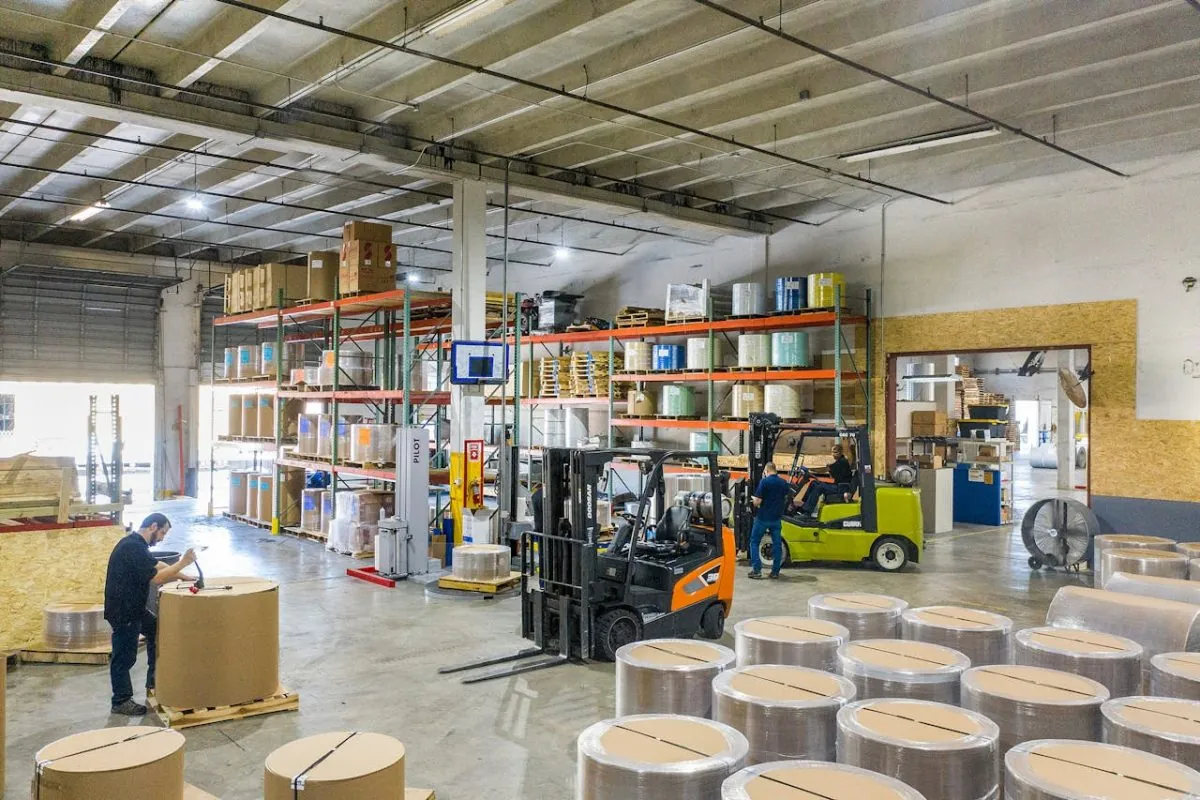
A fulfilment centre is a facility where products are stored, processed, and shipped directly to customers after an order is placed. It plays an active role in daily order processing, unlike traditional storage-focused warehouses. Businesses use fulfilment centres to handle logistics while focusing on sales, marketing, and customer experience.
In ecommerce, speed and accuracy shape customer expectations. A fulfilment centre supports both by organising inventory, managing orders, and coordinating shipping in one connected system. This setup reduces delays, improves order accuracy, and creates a more reliable delivery experience across multiple sales channels.
Fulfilment Centre Meaning in Ecommerce
A fulfilment centre in ecommerce refers to a logistics hub designed to manage high-volume online orders. It connects directly to online stores, marketplaces, and order management systems to process orders in real time. This integration keeps inventory updated and ensures customers receive accurate shipping updates.
Unlike manual fulfilment setups, ecommerce fulfilment centres rely on structured workflows and digital systems. Orders move quickly from purchase to dispatch, which helps businesses maintain delivery speed during peak periods such as sales events or product launches. This consistency builds customer trust and supports repeat purchases.
How a Fulfilment Centre Works
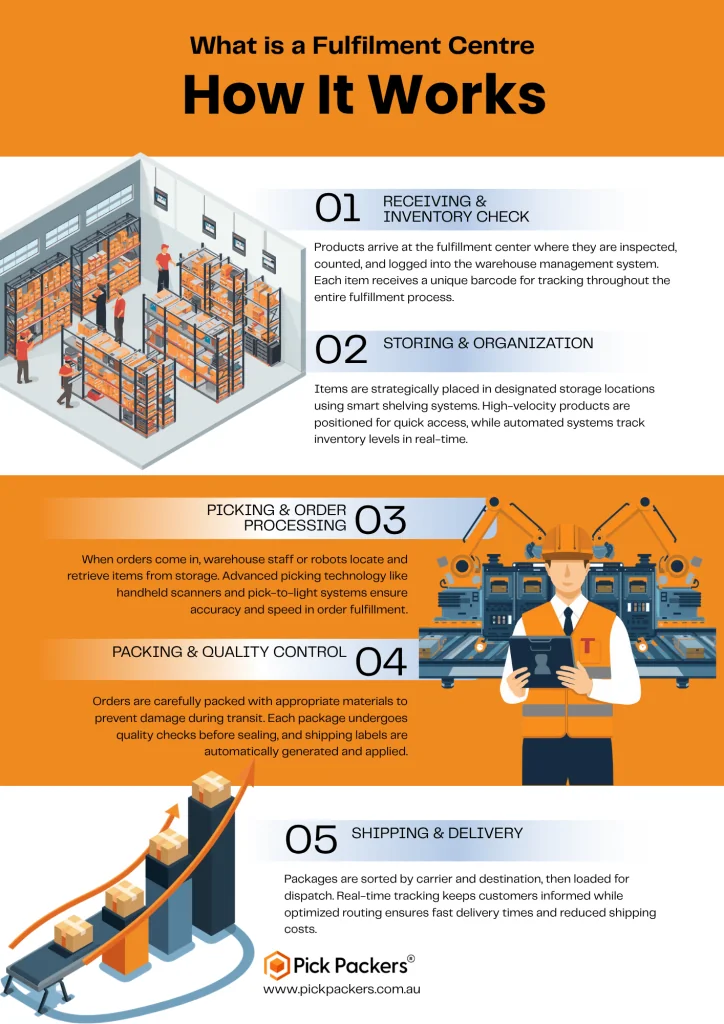
A fulfilment centre follows a structured process that keeps orders moving efficiently from arrival to delivery. Each stage connects through systems that reduce errors and improve speed.
- Receiving inventory
Products arrive from suppliers and are checked for accuracy before storage. - Storing products
Items are organised within the fulfilment warehouse for fast access during picking. - Order processing
Orders are received and verified through integrated systems such as an OMS. - Picking items
Staff or automation tools locate and retrieve the correct products. - Packing orders
Items are securely packed, labelled, and prepared for shipment. - Shipping
Orders are dispatched through carriers with tracking information sent to customers.
This process keeps operations consistent and scalable. Businesses can handle increasing order volumes without compromising accuracy or delivery timelines.
Fulfilment Centre vs Warehouse
A fulfilment centre and a warehouse both store inventory, but their roles differ in how they operate and support business growth. A warehouse focuses on long-term storage, often handling bulk shipments and less frequent movement of goods.
A fulfilment centre, on the other hand, is designed for active order processing. Products move in and out quickly as customer orders are picked, packed, and shipped daily. This difference makes fulfilment centres more suitable for ecommerce businesses that rely on fast delivery and real-time inventory updates.
Benefits of Using a Fulfilment Centre
Businesses turn to fulfilment centres to simplify operations and improve delivery performance. Instead of managing storage, staffing, and shipping internally, they rely on specialised systems and processes that handle logistics more efficiently.
- Faster delivery times through optimised picking and shipping workflows
- Improved order accuracy with barcode scanning and system tracking
- Scalable operations that handle growth and seasonal demand
- Reduced operational workload so teams can focus on growth
These benefits allow businesses to maintain consistent service levels while expanding their reach across multiple sales channels.
Fulfilment Technology and Systems
Modern fulfilment centres rely on technology to manage operations with precision. Systems connect inventory, orders, and shipping into a single workflow that updates in real time. This visibility helps businesses track performance and respond quickly to demand changes.
Order management systems organise incoming orders and route them efficiently. Warehouse management systems track inventory location and movement, reducing picking errors. Automation tools such as barcode scanning and conveyor systems support faster processing, allowing fulfilment centres to handle higher order volumes without delays.
Who Uses Fulfilment Centres?
Many industries rely on fulfilment centres to maintain consistent delivery and scalable logistics. Ecommerce brands depend on them to process daily orders quickly, while subscription businesses use them to manage recurring shipments with predictable timelines.
Retail and wholesale brands also benefit from structured fulfilment processes that support bulk orders and compliance requirements. As businesses grow, fulfilment centres become a practical solution for handling increasing order volumes without expanding internal operations.
When Should a Business Use a Fulfilment Centre?
A business should consider using a fulfilment centre when order volume begins to strain internal resources. Managing inventory, packing orders, and coordinating shipping can quickly become time-consuming and inefficient without the right systems in place.
Growth often brings complexity, especially when selling across multiple platforms or expanding into new markets. A fulfilment centre provides the infrastructure needed to manage that growth while maintaining speed, accuracy, and customer satisfaction.
What is a Fulfilment Centre: Bottomline
A fulfilment centre helps businesses store, process, and ship orders efficiently while maintaining accuracy and speed. With the support of integrated systems and structured workflows, companies can scale operations without managing logistics internally. This approach improves delivery performance and creates a stronger customer experience in competitive ecommerce markets.
FAQs: What Is a Fulfilment Centre?
What is a fulfilment centre?
A fulfilment centre is a facility that stores inventory and processes customer orders for shipping. It manages picking, packing, and delivery using integrated systems. This setup allows businesses to outsource logistics, improve efficiency, and maintain fast, accurate order fulfilment across multiple sales channels without handling operations internally.
How is a fulfilment centre different from a warehouse?
A fulfilment centre focuses on processing and shipping customer orders, while a warehouse primarily stores goods. Fulfilment centres handle daily order activity, including picking and packing, whereas warehouses manage bulk inventory with less frequent movement. This makes fulfilment centres better suited for ecommerce operations that require fast delivery and real-time updates.
How do fulfilment centres help ecommerce businesses?
Fulfilment centres help ecommerce businesses manage logistics by handling storage, packing, and shipping. This reduces operational workload and improves delivery speed and accuracy. Businesses can scale more easily, maintain customer satisfaction, and focus on growth activities such as marketing and product development instead of managing warehouse operations.
What technology do fulfilment centres use?
Fulfilment centres use systems like order management systems and warehouse management systems to manage operations. These tools track inventory, automate workflows, and improve accuracy. Automation technologies such as barcode scanning and conveyor systems support faster processing, allowing fulfilment centres to handle large order volumes efficiently.
When should a company outsource fulfilment?
A company should outsource fulfilment when order volume increases beyond internal capacity. Signs include delayed shipments, inventory errors, and rising operational costs. Outsourcing to a fulfilment centre provides access to systems, infrastructure, and expertise that improve efficiency, helping businesses maintain consistent delivery performance while scaling operations.
Ready to ship? Send us a message.

Author: Will Adlouni
Will Adlouni brings over a decade of expertise at Pick Packers, where he leads in redefining logistics with tailored solutions that save clients an average of 30% on costs. Specializing in fulfilment, e-commerce, and online logistics, Will focuses on exceeding client expectations by automating the sale-to-delivery process and offering expertise in EDI, B2B, and B2C View all posts by Will Adlouni