

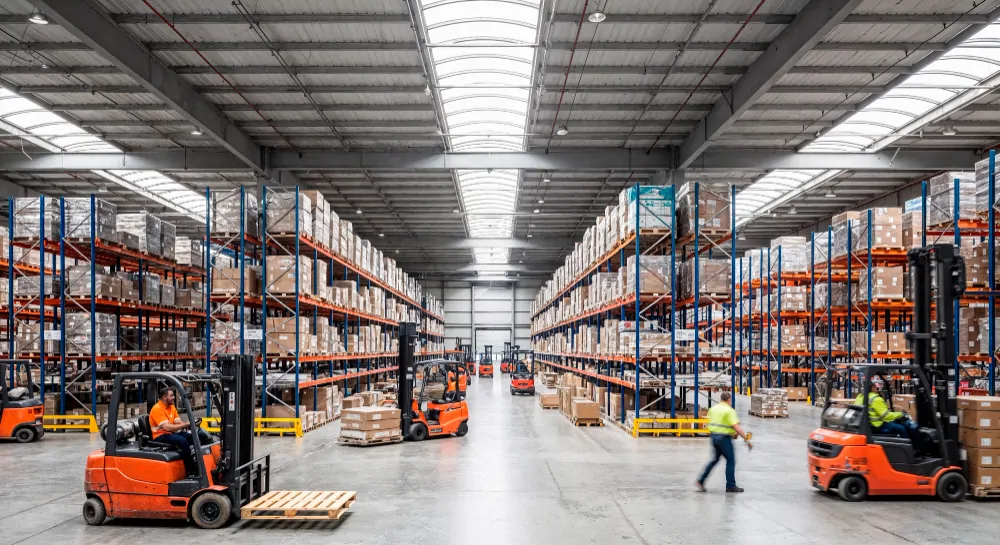
Order fulfilment made simple: explore efficient processes, automation tools, and models that help businesses scale faster while reducing costs and delivery times.
Explore reliable order fulfilment services designed for businesses ready to streamline operations, cut delivery times, and grow with smarter logistics solutions.
Key Takeaways:
- Takeaways: Order fulfilment ensures accurate, fast delivery from warehouse to customer, improving efficiency and customer satisfaction.
- Automation and real-time data streamline order fulfillment systems, cutting costs and speeding up delivery times.
- Choosing the right fulfilment model supports scalable growth and long-term business success.
What Is Order Fulfilment?
Order fulfilment is the complete process of receiving, processing, and delivering customer orders. It’s how products move from a seller’s inventory to the buyer’s hands — covering everything from storage and picking to shipping and returns.
In e-commerce, efficient order fulfilment ensures accuracy, speed, and customer satisfaction. The right strategy reduces costs, strengthens brand trust, and supports scalability as order volumes grow.
Modern fulfilment isn’t just about logistics — it’s a competitive differentiator. Customers expect fast, transparent shipping and easy returns. Businesses that meet those expectations turn fulfilment into a brand advantage.
The 7-Step Order Fulfilment Process
A strong fulfilment system follows a structured workflow that keeps operations consistent, efficient, and measurable. Each stage connects seamlessly to move products from supplier to customer with minimal delay and maximum accuracy. From receiving stock and managing storage to shipping and handling returns, every step plays a role in maintaining speed, reliability, and customer trust. When managed well, this process becomes the backbone of a scalable ecommerce operation.
- Receiving Inventory – Goods arrive from suppliers and are checked for quality and quantity before storage. Skipping this step risks inaccurate stock counts and customer disappointment.
- Storing Products – Inventory is organized within a warehouse or fulfilment center for quick access. Efficient storage systems shorten picking time and improve accuracy.
- Order Processing – Orders are verified, batched, and prioritized through an order management system (OMS) to ensure smooth flow.
- Picking Items – Workers or automation tools locate and retrieve the right products. Smart pick paths and barcode scanning minimize errors.
- Packing Orders – Items are securely packaged with the correct materials, invoices, and shipping labels. Sustainable packaging also improves brand perception.
- Shipping – Packages are dispatched using cost-effective carriers with real-time tracking to keep customers informed.
- Returns Management – Returns are inspected, restocked, or refunded quickly to maintain satisfaction and prevent inventory loss.
Businesses that automate their fulfilment processes can reduce operational costs by 20–30%, according to McKinsey (2024). These savings come from fewer manual errors, faster order turnaround, and better inventory visibility.
Types of Fulfilment Models
The right fulfilment model depends on order volume, budget, and long-term strategy. It determines how each step of the fulfilment process — from receiving inventory to shipping and returns — is managed, tracked, and optimized. Selecting the right approach ensures your workflow stays cost-efficient and scalable as your business grows. Below are the most common options:
- In-House Fulfilment: All processes are managed internally. It gives businesses full control and visibility but requires investment in labor, space, and systems.
- Third-Party Logistics (3PL): Outsourcing to a 3PL provider such as ShipBob or Red Stag allows companies to scale without physical infrastructure. This model suits growing e-commerce stores handling more than 100 monthly orders.
- Dropshipping: Products ship directly from the supplier to the customer. It minimizes risk but limits control over stock quality and delivery times.
- Hybrid Model: Combines multiple methods, such as in-house for premium products and 3PL for standard inventory. This model supports flexibility during seasonal spikes or rapid expansion.
Choosing the right model often depends on your fulfilment goals — control, scalability, or speed. Many e-commerce retailers start in-house and transition to 3PL or hybrid setups as their volume grows.
Fulfilment Technology & Automation
Technology is the backbone of modern fulfilment. It enables speed, accuracy, and scalability across every step of the process. Today’s systems connect sales channels, warehouses, and logistics partners in real time, ensuring that inventory levels, order data, and customer updates stay perfectly aligned. By integrating software and automation, businesses can handle higher order volumes without sacrificing quality or increasing costs.
Core Systems
- Order Management System (OMS): Centralizes order data from multiple sales channels, automating routing, labeling, and customer updates.
- Warehouse Management System (WMS): Tracks inventory in real time, reduces picking errors, and ensures optimal use of space.
- Enterprise Resource Planning (ERP): Integrates financials, procurement, and fulfilment operations for data-driven decision-making.
Automation Technologies
- Robotic Picking Systems: Use guided robots or automated carts to retrieve items faster than manual methods.
- Conveyor and Sorting Systems: Move and categorize products for shipping without manual handling.
- AI Demand Forecasting: Predicts stock levels using historical data and trends, preventing overstock or stockouts.
- Cloud Integrations: Allow seamless communication between e-commerce platforms and fulfilment tools, improving transparency for both customers and teams.
According to Deloitte’s Global Supply Chain Report (2024), companies that integrate automation within fulfilment improve delivery speed by 25% and reduce human error by 35%.
Emerging Trends
Fulfilment technology continues to evolve as customer expectations rise and e-commerce competition intensifies. Emerging innovations focus on faster delivery, sustainability, and smarter data use — all of which strengthen efficiency and brand trust.
- Micro-Fulfilment Centers: Small urban hubs shorten delivery times for same-day or next-day shipping. These compact spaces bring inventory closer to end customers, reducing transport costs and enabling faster order turnaround.
- Sustainable Fulfilment: Green packaging, route optimization, and carbon-neutral shipping reduce environmental impact while appealing to eco-conscious consumers. Many businesses now use recyclable materials and optimize delivery routes to cut emissions.
- Data-Driven Optimization: Analytics dashboards measure pick times, order accuracy, and carrier performance in real time. This insight helps managers identify bottlenecks, forecast demand more accurately, and continuously improve fulfilment efficiency.
Together, these technologies and trends define the next generation of fulfilment — one that balances automation, sustainability, and customer satisfaction.
Challenges and Solutions
Even efficient fulfilment systems face challenges. The key is to identify recurring bottlenecks and apply strategic solutions that support scalability. As order volumes grow and customer expectations rise, issues such as inventory errors, shipping costs, and technology gaps can quickly affect profitability and satisfaction. A proactive approach—supported by data, automation, and cross-department coordination—helps maintain reliability and speed. By addressing these challenges early, businesses can strengthen operations and create a fulfilment process that evolves with demand.
Challenge | Impact | Solution |
Inventory inaccuracies | Stockouts, overselling, and customer complaints | Use real-time WMS tracking and barcode scanning to maintain visibility |
Rising shipping costs | Reduced profit margins and higher cart abandonment | Negotiate carrier contracts, use regional warehouses, and analyze zone pricing |
Delivery delays | Loss of trust and negative reviews | Optimize routing, enable order tracking, and use multiple carriers |
Returns management | High processing costs and restocking delays | Standardize return procedures, automate label creation, and restock quickly |
Labor shortages | Slower fulfilment and inconsistent output | Adopt robotics, cross-train employees, and invest in ergonomic systems |
Technology integration gaps | Data silos and poor accuracy | Integrate OMS, WMS, and ERP through APIs or cloud systems |
Statista (2024) found that 73% of e-commerce businesses cite shipping costs and delays as their biggest operational challenges. Those using real-time tracking and integrated systems report 30% fewer delivery complaints. Businesses that treat fulfilment as a continuous improvement process, not a static workflow, can adapt faster and meet growing consumer expectations.
Key KPIs and Metrics
Tracking measurable data ensures that fulfilment operations stay efficient and scalable. The following metrics are essential for ongoing performance evaluation:
- Order Accuracy Rate: Percentage of correctly fulfilled orders. A benchmark of 98% or higher maintains strong customer retention.
- Inventory Turnover Ratio: Measures how fast stock is sold and replenished. A higher ratio signals efficient inventory use.
- Average Fulfilment Time: Time between order receipt and shipment. Faster fulfilment means better competitiveness in e-commerce.
- On-Time Delivery Rate: Reflects carrier reliability and internal process efficiency. Target at least 95%.
- Return Rate: Tracks how often products come back. High rates can indicate product, listing, or packaging issues.
- Cost per Order (CPO): Total cost to pick, pack, and ship one order. Helps identify savings through automation or carrier optimization.
- Perfect Order Rate: Combines multiple KPIs — accuracy, timeliness, and completeness — into a single success score.
According to Shopify Plus Operations Benchmark (2024), merchants that actively monitor fulfilment KPIs improve delivery times by 22% and reduce costs by 15%.
A simple dashboard integrating OMS and WMS data helps teams respond quickly to errors, identify underperforming carriers, and adjust stock levels based on real-time trends.
Order Fulfilment in Australia: Bottom Line
Efficient order fulfilment turns logistics into a growth advantage. By combining automation, real-time data, and the right fulfilment model, businesses can deliver faster, reduce costs, and build customer trust. Streamlined processes and smart technology make order fulfillment a reliable foundation for scaling operations and improving the overall customer experience.
Order Fulfilement Services: FAQs
Here are some of the most frequently asked questions about order fulfilment that Pickpackers addresses to help businesses improve efficiency and customer satisfaction:
What is the difference between order fulfilment and shipping?
Shipping is only one part of order fulfilment. Fulfilment covers everything from receiving and storing products to picking, packing, shipping, and managing returns. It ensures the entire process runs smoothly from warehouse to customer delivery.
How long does order fulfilment take?
Most e-commerce orders are fulfilled within 24 to 72 hours. Actual timelines depend on warehouse efficiency, automation level, and courier performance. Businesses using real-time inventory systems and automated workflows often ship faster and more accurately than those relying on manual processes.
What’s the best fulfilment strategy for small businesses?
Small businesses benefit most from third-party logistics (3PL) providers. 3PLs manage storage, packing, and shipping while lowering overhead costs. This approach lets business owners focus on marketing, product quality, and customer experience instead of daily fulfilment tasks.
How can automation improve fulfilment?
Automation speeds up operations, reduces errors, and provides real-time visibility across every stage of order fulfilment. Businesses can process more orders with fewer resources, maintain accuracy, and track performance data instantly, helping them scale efficiently without compromising customer satisfaction.

Author: Will Adlouni
Will Adlouni brings over a decade of expertise at Pick Packers, where he leads in redefining logistics with tailored solutions that save clients an average of 30% on costs. Specializing in fulfilment, e-commerce, and online logistics, Will focuses on exceeding client expectations by automating the sale-to-delivery process and offering expertise in EDI, B2B, and B2C View all posts by Will Adlouni