
Key Takeaways:
- Freight suits large, heavy, or palletised shipments.
- Couriers work best for small, time-sensitive parcels.
- Cost, speed, and shipment size determine the right choice.
Freight services vs courier services: a practical comparison
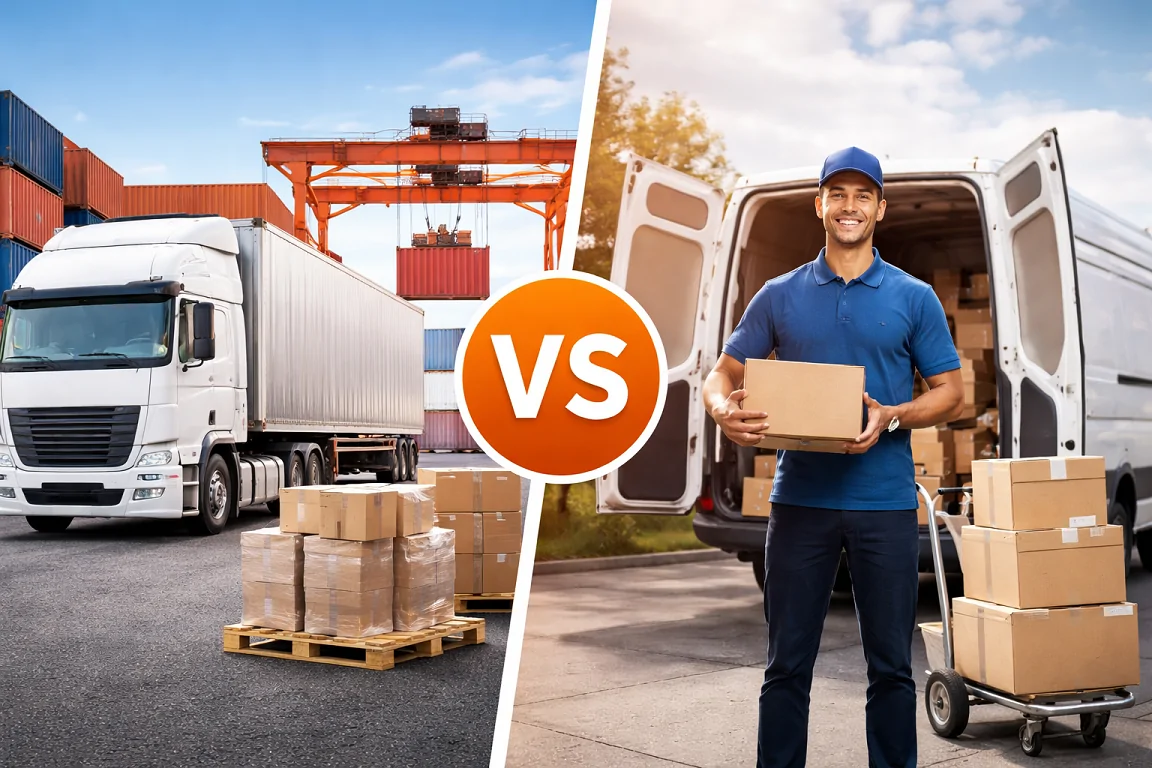
Freight services and courier services support very different business shipping needs. Couriers focus on small parcels, fast delivery, and door-to-door convenience, while freight services handle heavier, bulkier, or palletised goods moving through structured transport networks. Understanding how each option works helps businesses avoid overpaying for speed they don’t need or risking delays by using the wrong service type.
The decision usually comes down to shipment size, weight, urgency, and cost control. Businesses shipping a few parcels per day face different challenges than those moving pallets between warehouses or retail locations.
What are courier services best suited for?
Courier services specialise in fast, parcel-based delivery. They’re designed for lightweight shipments that need quick transit times and predictable delivery windows. Ecommerce brands often rely on couriers to meet customer expectations for next-day or same-day delivery, especially for metro areas.
Couriers price shipments by parcel weight and dimensions, making them cost-effective for small orders but expensive as size and volume increase. They also provide end-to-end tracking and residential delivery support, which suits direct-to-consumer shipping.
When freight services make more sense
Freight services handle larger shipments that exceed standard parcel limits. This includes palletised goods, oversized items, or bulk inventory transfers between facilities. Freight moves through road, rail, sea, or air networks and prioritises efficiency and load optimisation over speed.
For businesses shipping heavy or bulky goods, freight services reduce per-unit transport costs and support structured delivery schedules. While transit times may be longer than courier delivery, freight offers stability, scalability, and cost control for growing operations.
Cost differences businesses should understand
Courier pricing increases quickly as parcels grow heavier or larger. Freight pricing, on the other hand, spreads transport costs across pallets or consolidated loads. This makes freight more economical for large shipments, even if delivery takes longer.
Businesses often overspend by using couriers for shipments better suited to freight. Matching shipment size and urgency to the right service prevents unnecessary accessorial fees, re-delivery charges, and dimensional weight penalties.
Choosing the right option for your business
The right choice depends on how your business ships, not just how fast you want delivery. A simple evaluation usually includes shipment size, delivery urgency, customer expectations, and budget constraints.
If a list is helpful, these factors often guide the decision:
- Parcel size and weight consistency
- Required delivery speed
- Shipping frequency and volume
- Cost sensitivity versus customer experience
Many businesses use both services side by side, applying couriers for customer orders and freight for stock replenishment or wholesale distribution.
Bottomline: freight services vs courier services
Freight services and courier services solve different shipping problems. Couriers deliver speed and convenience for small parcels, while freight provides cost efficiency and capacity for large or heavy shipments. Businesses that match the service to the shipment reduce costs, avoid delays, and create more reliable delivery operations as they scale.
FAQs: Freight services vs courier services
Below are some of the most frequently asked questions we address about freight services:
What is the main difference between freight services and courier services?
The main difference is shipment size and handling. Courier services deliver small parcels quickly, while freight services transport large, heavy, or palletised goods through structured networks. Businesses choose based on weight, volume, urgency, and cost efficiency rather than delivery speed alone.
Is freight cheaper than courier services for businesses?
Yes, freight is usually cheaper for large or heavy shipments. Freight spreads transport costs across pallets or loads, while couriers charge per parcel and dimensional weight. For bulk or oversized goods, freight reduces per-unit costs even if transit times are longer.
When should a business use courier services instead of freight?
A business should use courier services when shipping small, lightweight parcels that require fast delivery. Couriers suit ecommerce orders, residential deliveries, and time-sensitive shipments where speed and tracking matter more than transport cost efficiency.
Can businesses use both freight and courier services together?
Yes, many businesses use both. Couriers handle customer orders and urgent deliveries, while freight services move inventory, pallets, or bulk goods. This hybrid approach balances speed, cost control, and operational flexibility across different shipping needs.
Do freight services include door-to-door delivery?
Freight services can include door-to-door delivery, but it depends on the carrier and service level. Some freight shipments require business access, loading equipment, or scheduled delivery windows, which differs from standard courier residential delivery.
Ready to ship? Send us a message.

Author: Will Adlouni
Will Adlouni brings over a decade of expertise at Pick Packers, where he leads in redefining logistics with tailored solutions that save clients an average of 30% on costs. Specializing in fulfilment, e-commerce, and online logistics, Will focuses on exceeding client expectations by automating the sale-to-delivery process and offering expertise in EDI, B2B, and B2C View all posts by Will Adlouni